Blog
06th August 2025
Image Source: thyssenkrupp Polysius
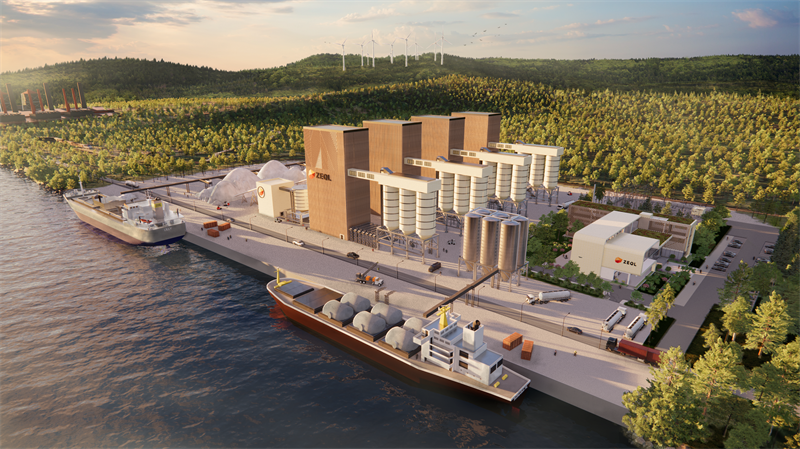
thyssenkrupp Polysius has been selected to supply the electric kiln system for the world’s first zero-emission lime plant, which will be built in Mo i Rana, Norway. Developed in partnership with SMA Mineral and SaltX Technology, the plant aims to completely eliminate CO₂ emissions from quicklime production by using renewable electricity and advanced calcination technologies.
The project is based on the Zero Emission Quicklime (ZEQL) concept, which electrifies the traditional lime production process and enables CO₂ to be captured in a pure form. At the core of this transformation is the Electric Arc Calciner, developed by SaltX. This innovation replaces fossil fuel combustion with clean electricity and isolates carbon dioxide for potential reuse or storage.
thyssenkrupp Polysius brings industrial scaling expertise to the project. “The collaboration with SaltX enables us to combine innovative electrification technology with our proven engineering capabilities,” said Pablo Hofelich, CEO of thyssenkrupp Polysius. “We are proud to contribute our process know-how and to support the design and supply of the world’s first electric kiln for zero-emission quicklime.”
The kiln system supplied by Polysius will be accompanied by essential preheating components, ensuring optimal thermal efficiency and scalability. The plant is expected to produce around 40,000 tons of fossil-free quicklime annually and is scheduled to start operations in 2027. Funding support of EUR 24 million has been granted by Enova, a Norwegian state enterprise dedicated to advancing clean energy technologies.
From SaltX’s perspective, the collaboration marks a major milestone in commercializing their decarbonization technology. Carl-Johan Linér, CEO of SaltX, stated: “We are extremely proud to have thyssenkrupp Polysius as our partner. Together, we are creating a solution that can decarbonize an entire industry. This is not just a technology project; it is a climate innovation that addresses a global challenge.”
SaltX has already proven the Electric Arc Calciner at its pilot facility in Hofors, Sweden, where it achieved over 99 percent reactivity and demonstrated continuous operation. Quicklime produced from the pilot is now being prepared for testing by a major Swedish steelmaker.
This innovation is seen by many as a potential game changer for heavy industries such as lime, cement, steel, and even direct air capture. Commenting on the broader significance, Carl-Johan Linér added: “The ZEQL project is setting a new standard. We are proving that hard-to-abate sectors can be electrified and that we can produce quicklime with zero emissions at scale.”
The project also has strong potential beyond its first plant. By capturing CO₂ as a clean stream, the process creates opportunities for circular carbon applications such as synthetic fuels or industrial reuse, while significantly reducing the carbon footprint of construction materials.
As the world faces mounting pressure to decarbonize industrial sectors, this partnership between SaltX and thyssenkrupp Polysius stands as a pioneering example of how innovation, engineering, and policy can align to create impactful change. The zero-emission lime plant is not just a technological milestone, but also a blueprint for a cleaner industrial future.
For access to detailed project data, custom market intelligence, or to discuss how we can support your strategic goals, get in touch with our team.